The search for Saola is back on, and December is within reach
Our campaign target is within reach!
$147,311 raised of our $150,000 target
October
November
December
Gifts are matched dollar for dollar for the next $1,413 (of the original $20,000) by Givskud Zoo and Odense Zoo. $18,587 of the match has been used so far, shown in orange on the bar.
Last updated 3 November 2026, 3 a.m. US Central time
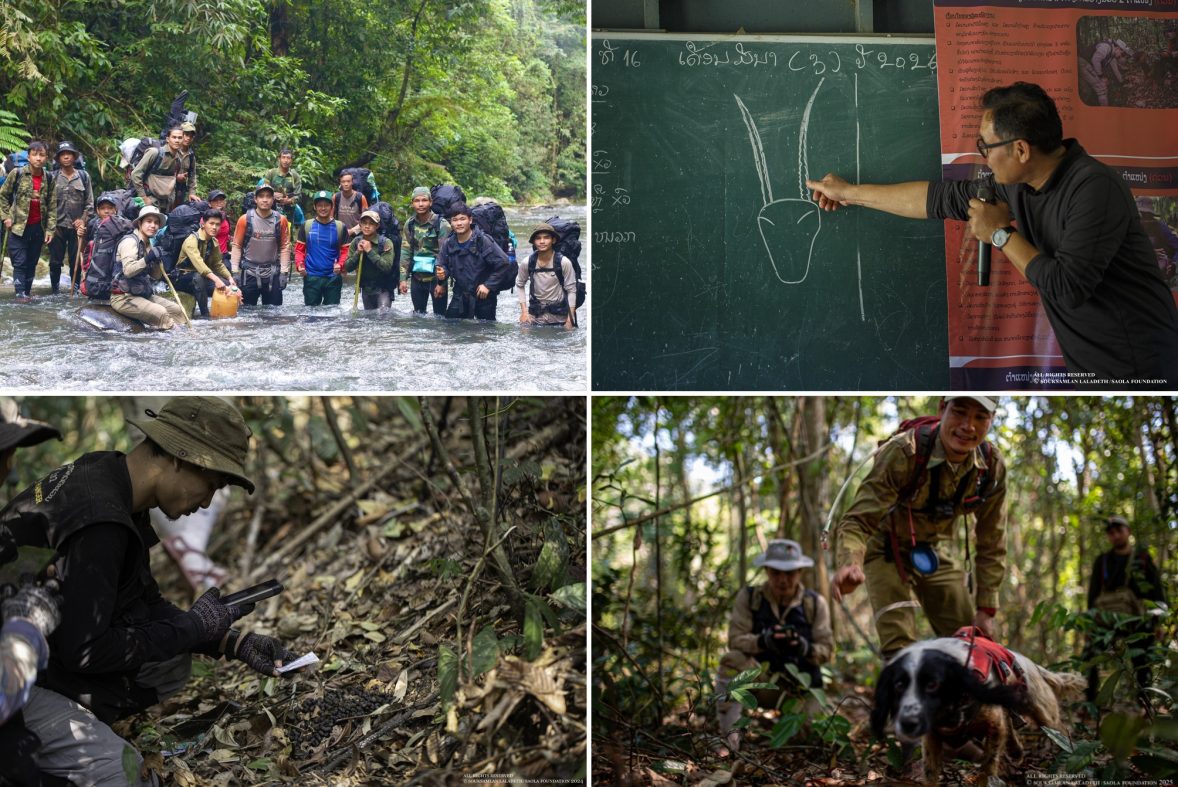
Meet the Annamite Mountains Research and Conservation Team
The Annamite Mountains Research and Conservation Team is the Saola Foundation’s Lao field team: trackers, dog handlers, logisticians and technicians, working across our Animal Tracking Unit, Scent Detection Dog Unit, Logistics Unit and Technical Unit. Our trackers come from communities across the Annamite Mountains Bioregion.
After a funding shortfall paused the resumption of fieldwork after the wet season, the team is back in the forest in Lao for October, searching for Saola. Zoo Ostrava’s Annual Zoo Run carried the campaign past its first $50,000 milestone and made that possible. November is now funded too. Now we need to keep them there through December.
Want to know how they search? Read Rob Timmins’ deep dive into our field methods.
More than the Saola: a record of the forest
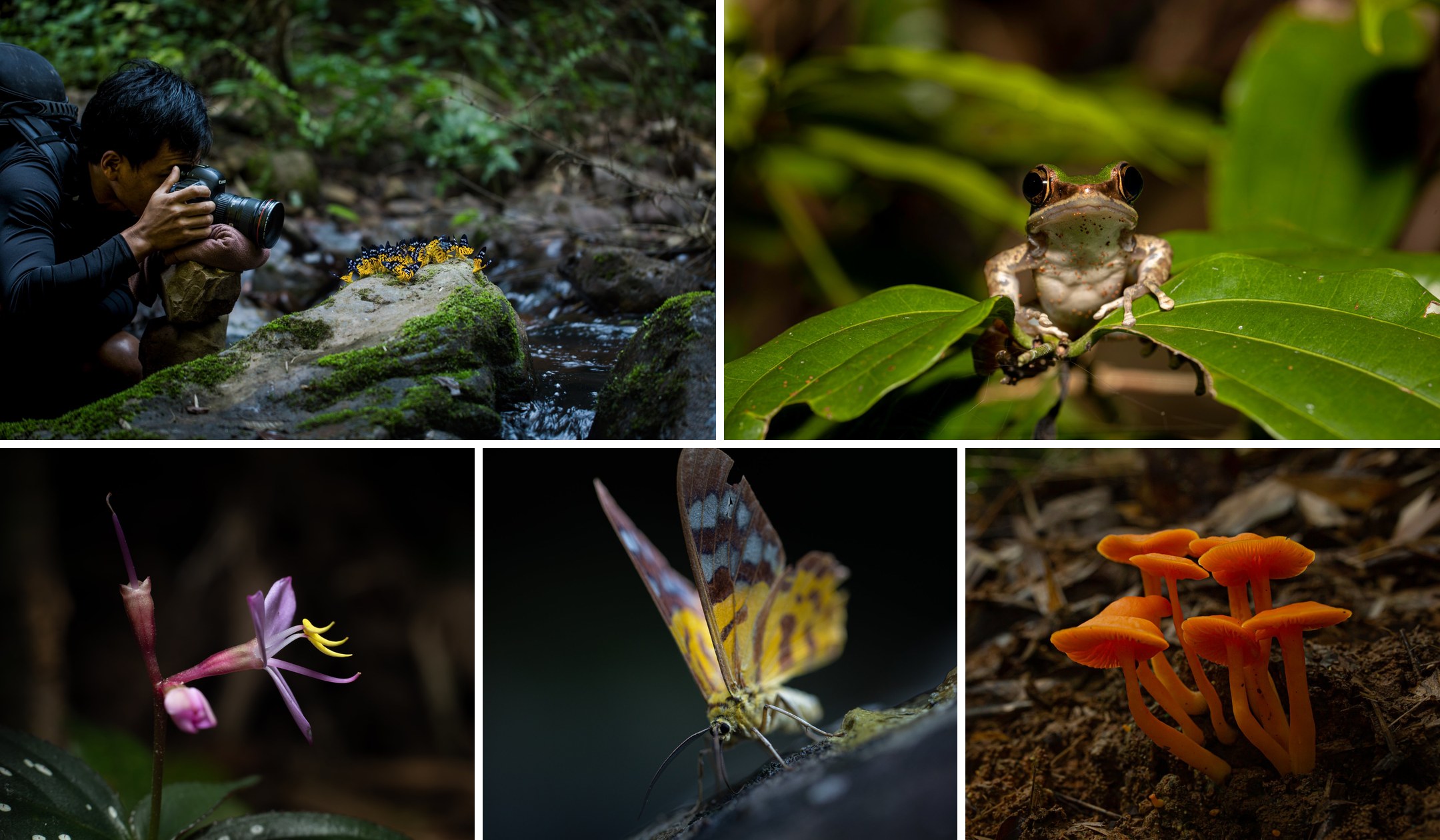
The search for Saola is also supporting an incredible field team to build a detailed record of a little-studied forest. In 2026, our Annamite Mountains Research and Conservation Team recorded the survey area’s first Wreathed Hornbill (Rhyticeros undulatus), its fourth hornbill species, and the calls of Annamite Crested Argus (Rheinardia ocellata) and Coral-billed Ground-cuckoo (Carpococcyx renauldi). In 2025, surveys recorded Red-shanked Douc (Pygathrix nemaeus), Northern White-cheeked Gibbon (Nomascus leucogenys), Indochinese Grey Leaf Monkey (Trachypithecus crepusculus), Western Serow, Sambar, and the Endangered Impressed Tortoise (Manouria impressa) and Keeled Box Turtle (Cuora mouhotii).
The team also documents snares, hunting camps, gunshots and yellow vine harvesting. Threat levels in our survey area have been found to be relatively low, which adds to the landscape’s value.
With thanks
A massive thank you to every zoo, organization and individual who has made this possible.







And to an anonymous donor, and the growing number of individual donors standing with Saola, thank you.
Your gift is doubled
Givskud Zoo and Odense Zoo have put up $20,000 to match donations to this appeal, dollar for dollar. Until that fund is used, every gift counts twice. $50 becomes $100. $500 becomes $1,000.


Support a specific action
Every contribution makes a difference to us. For those who want to support a specific action:
- $100 feeds the team for a day in the forest.
- $700 funds the search behind one sample collected: one more chance to find a Saola.
- $2,500 fuels the vehicles to get the team into the forest and back for one 20-day rotation.
- $50,000 puts the team in the forest for a month, collecting around 70 samples: 70 chances to confirm a Saola.
How do we search for one of the rarest animals on earth, that almost nobody has seen?
For those interested in our specialized field methods, here is a deep dive from Rob Timmins, our Technical Director, into why our method stands the highest chance of detecting one of the rarest species on the planet.
By Rob Timmins, Technical Director
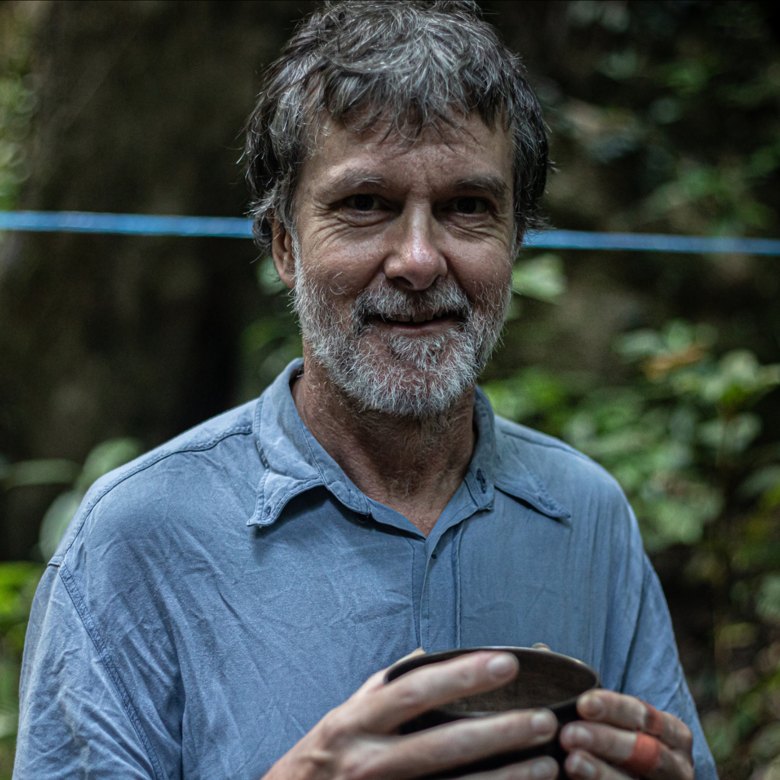
Ours is a job like no other. Fewer than 50 Saolas are thought to remain, spread through potentially 10,000 to 15,000 km² of rugged mountain forest along the length of the Annamite Mountains. Conventional wildlife surveys usually set out to detect some of the animals in a population and rarely expect to detect all of them. These methods assume that animal densities (such as the number of individuals per km²) and detection probabilities of animals in the population (the odds of detecting some animals in the population) are reasonably high, i.e. they assume they are not looking for a needle in a haystack. Saola densities are assumed to be so low that the local population size is now effectively one individual Saola. So when searching our chosen survey area, we are essentially looking for a single animal, akin to looking for a single needle in a giant haystack!
Why the Saola is so hard to find
Tiger, bears or Gaur leave ‘signs’ in the forest (evidence such as scent markings, tracks, distinctive dung) that a trained observer can easily find and recognize.
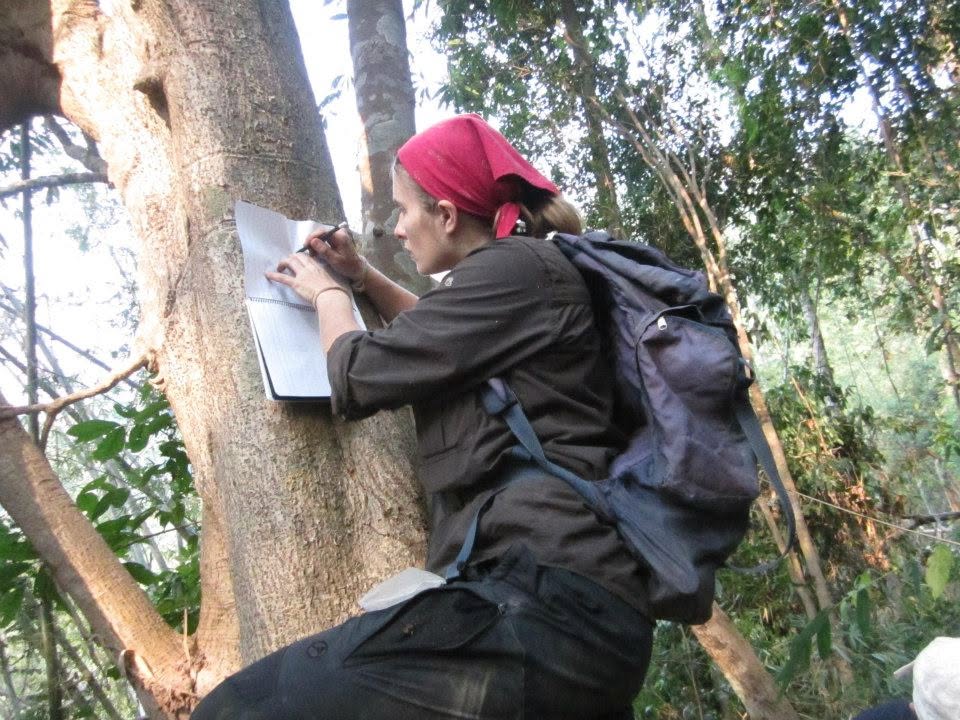
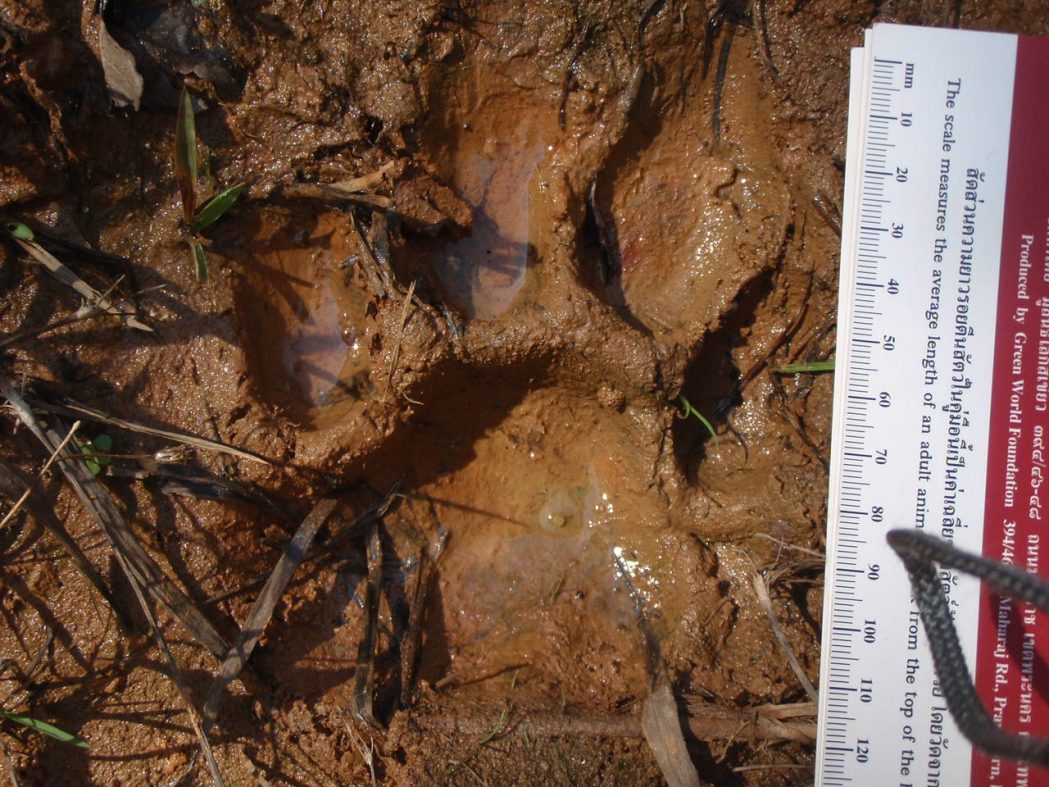
Saola signs are less recognizable, with no known distinctive features to separate them from those of other hoofed mammals, especially serow. Local knowledge of Saola signs is sparse and hard to verify. We cannot confirm Saola signs by eye, like those of a Tiger or bears. The only tangible proof we can rely on is from a photograph of an animal, Saola DNA, or a Saola itself.
So, how do you detect one animal in a huge area of forest that is extremely challenging for humans to move through? If Saola were common, it would be much easier to find evidence of them, as was the case in the 1990s. Unfortunately, as animal density decreases, so does the chance of finding them. ‘Detection probability’ (the likelihood of finding a Saola or its signs) is based on several other factors including ease of recognition of Saola signs and our ability to predict where to search.
Camera-traps are often a good choice for monitoring populations of more common species. However, when it comes to animals at low densities, there are a number of key drawbacks. For instance, the ‘detection footprint’ (the amount of area searched) of a camera-trap’s sensor is very small, much smaller in fact than that of an animal tracker or detection dog’s detection footprint per day of effort. Animal trackers and detection dogs, travelling significant distances each day, can cover much more ground, equivalent to several hundred camera-traps per person or dog.
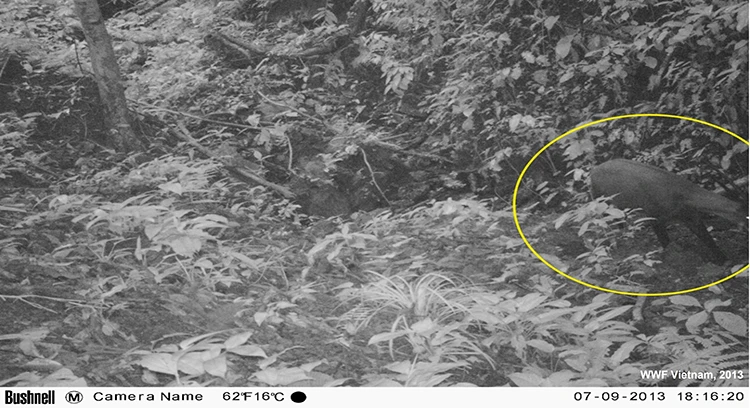
The 2013 camera-trap photograph of a Saola in Viet Nam was most likely a very lucky break. The drawbacks of camera traps and any other common survey method for detecting Saola inform our strategic reasoning that years without confirmed evidence of Saola do not mean the Saola is gone. Bears and Gaur, commonly targeted by hunters for their products and value for trade and much easier to detect than Saola, still survive in the same forests at very low densities. The lack of detections of Saola over the last 10 years is an indication of extreme rarity. We see no sound scientific reason to conclude the Saola is extinct.
Searching the right patch of habitat, thoroughly
Any given area of forest holds either a very small number of Saolas or none, so our first question is not: where are they most common? But: where are we most likely to find an individual Saola, and how can we maximize our chances of detecting it if it’s there? We could search many different areas of forest superficially with a low probability for each area of detecting any Saola that are present, or we can search one area intensively with a much higher probability of detecting any Saola that are present. The choice between these two scenarios boils down to two factors. The first is efficiency: it is more efficient to search one area intensively than to spread the same level of effort over a much larger area composed of sites scattered through the Annamite Mountains. Secondly, some patches of forest inevitably have a higher probability of Saola remaining in them than others, so if we feel confident in understanding the likely factors that contribute to that probability, we can predict those sites with higher likelihood of Saola presence. Rather than casting our net far and wide for Saola, we have analyzed the evidence available and predicted to the best of our ability the area of forest most likely to still hold at least one individual Saola, and we have been searching that target area at high spatial intensity. Our target area covers approximately 116 square miles (300 km²) of the Nam Chouan and Nam Xang landscape in Bolikhamxay Province, on the border with Viet Nam. We chose this site largely because we predicted it would have high densities of muntjac and serow (other ‘ungulates’, or hoofed mammals, within Saola range), and relatively low hunting levels; both of these predictions have been validated by our surveys. Detection rates of muntjac and serow act much like ‘wildlife health barometers’; where those species are doing well, Saola plausibly could be hanging on in small numbers.
Our most cautious estimate of Saola density is one Saola per 300 km² (that’s the size of our target search area), and our most hopeful estimate was one Saola per 50 km². Our approach hinges on our prediction that even if only one animal lives in our target area, a complete search at the appropriate intensity should find it.
How we cover the ground
Every tracker and dog records GPS data (geographical location data), and every ‘search track’ (the route the team walks) is recorded and mapped out. We know exactly which patches of forest have been searched and when. Search tracks are aligned approximately 100–150 m apart on the landscape, and because of the steep and rugged terrain, follow contours. The target is at least 10 km of search track per square kilometer, about 16 miles for every square mile. Beginning in April 2025 the team began systematically surveying the target area, and by the end of June 2026 they had searched at least 35 square miles (92 km²) of forest.
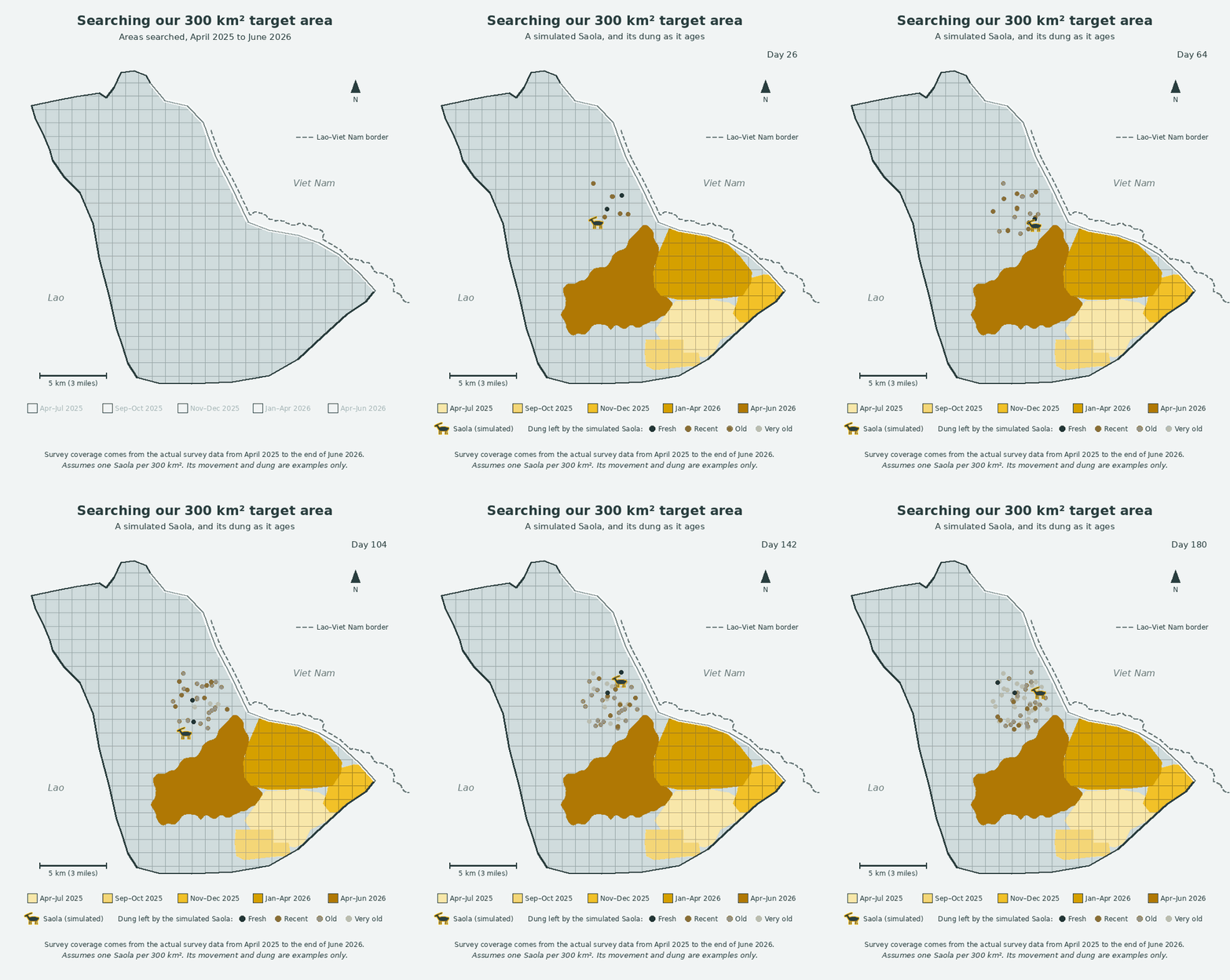
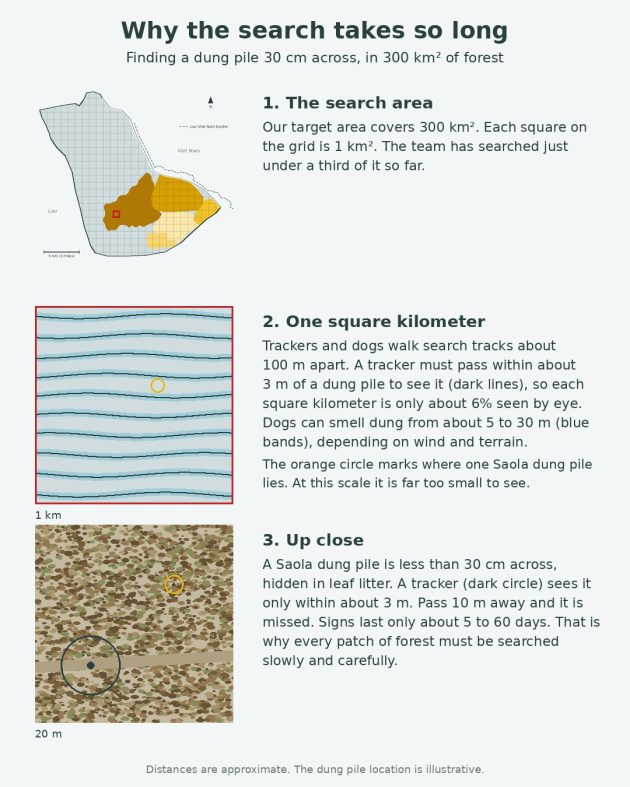
Three ways of finding one hard to find animal
The search combines three methods within one skilled and versatile field team. Our Animal Tracking Unit, using trackers from Annamite communities following the standards of CyberTracker Conservation, systematically searches for dung and fresh trails of potential Saola, reading signs to follow one sign to the next. Our Scent Detection Dog Unit, trained by Working Dogs for Conservation and Chiron K9, finds dung even more effectively than the trackers. And because Saola and serow dung cannot be told apart by eye, every ‘candidate dung sample’ (dung that could be from a serow or a Saola) is tested for DNA at base camp with portable equipment, designed to give an answer within a couple of hours. Before this technology was available, designed for us by the Wildlife Conservation Society (WCS) Molecular Lab in New York, obtaining results would come months later with samples processed by a laboratory. The use of this DNA technology represents one of the greatest advancements in Saola conservation since the species’ discovery. A positive result can be followed up while the trail is still warm.
Measuring what we cannot see
In our target area, Saola are either ‘present’ (there) or ‘absent’ (not there). Distance walked by our field team, on its own, tells us little about whether we would have ‘detected’ (found) a Saola that was present. We measure our detection skill on the animals we can find. We record the dung of every hoofed mammal and categorize them by species or species group (muntjac and serow are most common) and each dung pile by age (fresh, recent, old or very old). How reliably the team finds the common species is our best guide to the chance of missing a rare one. Our survey data are analyzed in various ways, one of which is based on detection rates in standardized 1 km² grid ‘cells’ covering our surveyed areas. For instance, in 2025 our team found muntjac signs in 91% of the ‘cells’ (1 km² squares of our target area) where at least 20 percent of our target of 10 km of linear survey had been completed, and serow signs in 85%. Where an individual muntjac or serow is present, we believe based on the data the team almost always finds it. That gives us confidence that if a Saola had been in the areas we searched, we would have had a good chance of finding its signs.
What the results mean: what chance do we have?
We have covered approximately 30% of our target area to date, and estimate that by doing so, we had a reasonable chance of detecting a Saola if one was present in that area searched. If the team detected every Saola sign it walked past, the chance of having found a Saola by now, if our most cautious Saola density estimate of one Saola per 300 km² holds, would roughly equal the share of the area searched. Of course, detection is not perfect, which is why we gauge our search effectiveness through the team’s success in detecting more common species. Finding no sign of Saola yet is disappointing, but it is not regarded as evidence the Saola is gone. It does, however, probably mean that our most hopeful estimate of Saola density at one Saola per 50 km² was sadly too hopeful. We are indeed searching for the rarest of the rare.
What changes when we find one
The first Saola changes everything. Systematic searching stops, and the team switches to following that animal: learning how it moves, what signs it leaves and where it goes. Each piece of that knowledge makes the next Saola easier to find. Saving the species starts with finding one. If we ultimately cover the whole area and find no Saola, that is a serious result questioning our assumptions. However, technical review of the search is relatively continuous, as we want to evaluate our assumptions and effectiveness regularly along the way. Over the next three months, we anticipate covering another 10% of the target area. That’s another plausible chance of finding a Saola that is present.
That is a chance that we are privileged to take.
The search in numbers
- 35 square miles (92 km²) of forest surveyed, just under a third of our 116 square mile (300 km²) target area.
- 5,222 dung piles found.
- 917 tested for Saola DNA.
None were Saola. Not yet.
Another three months gets us tens more samples to test, tens more chances to detect a Saola. Although there’s no way to put a reliable figure on it, those extra three months potentially add upwards of 3% chance of finding a Saola if it’s out there. If you had a 3% chance of winning the lottery next week (instead of one in ten million), how would you feel?
Keeping the field team together: a bridge to new programs

Three more months in the forest is also three more months of investment in Lao conservation capacity and leadership. The next three months matter for Saola, and they matter for the livelihoods of the Annamite Mountains Research and Conservation Team. Without this campaign, the contracts of 23 of our 28 field team members would have ended on September 30.
This team represents years of specialized training and partnership with Working Dogs for Conservation, CyberTracker Conservation, WCS Lao, the WCS Molecular Genetics Lab and the National University of Laos. A field team of this caliber cannot be stood down and then easily rebuilt. If contracts had ended on September 30, we would have lost in a single step the animal tracking, logistics and technical capacity that took years to recruit and train, along with the institutional knowledge and the confidence of the Government of Lao PDR (GoL) that came with it. Rebuilding that capacity would take far longer, and cost far more, than the three months of funds we are campaigning for.
Beyond the Saola search, the skills and versatility of the team have become highly regarded within Lao, with a series of successful collaborations with the World Wide Fund for Nature, WCS Lao, Association Anoulak, the International Union for Conservation of Nature and the National University of Laos. Most significantly, our team is the foundation of every program in our long-term strategic plan, and the successful launch of these new programs depends on them. Keeping our team together and mobilized in the forest for the next three months keeps the Saola search alive and carries our skilled and devoted Annamite Mountains Research and Conservation Team onwards on the path to long-term impact in conservation in the Annamite Mountains Bioregion.
Give
Every gift goes to the same place: keeping the team in the forest through December. Your contribution today directly determines whether our trackers and scent detection dogs are in the forest through the end of the year.
October and November are funded. Every $50,000 raised puts the full team in the forest for one complete month, and December is the last month to fund.
Your gift is tax deductible in the United States. The Saola Foundation is a registered 501(c)(3), EIN 82-3731270.
Technical partners: Working Dogs for Conservation and CyberTracker Conservation.
The world still believes in Saola
We have received the incredible news from Zoo Ostrava that their Annual Zoo Run raised CZK 265,000 (about US$12,100) for the Saola search. This propels us past our first US$50,000 milestone, enough to put the team back in the forest for October, the first of three months of searching we hope to do by the end of December. The team went back into the forest in October. But the campaign is not over. Not yet! An anonymous gift of $50,000 has since funded November. We still need funding to keep them there until the end of the year, and Givskud and Odense’s matching pledge is still doubling gifts.

Ready, Set, Go!
On the evening of Friday 21 August 2026, 1,000 people ran through Zoo Ostrava in the Czech Republic for Saola, an animal perhaps none of them will ever see. Read the full story.
Our multidisciplinary field team is back in the field searching for Saola. Now we need to keep them there through December.
We are a science-led organization, and the data give us confidence that Saola could still survive in small numbers. Every month the team spends in the forest is another chance to find one in our target area, IF we can keep searching.
Driven by science, we are also fueled by the dedication shown by so many that Saola still has a chance. In this past year:
- Several of our long-standing donors agreed to meet pledged commitments early so the team could stay in the forest in June and remain salaried through to the end of September.
- In August, we convened a transboundary workshop requested by the GoL with Viet Nam to agree what both countries would do if a Saola is found.
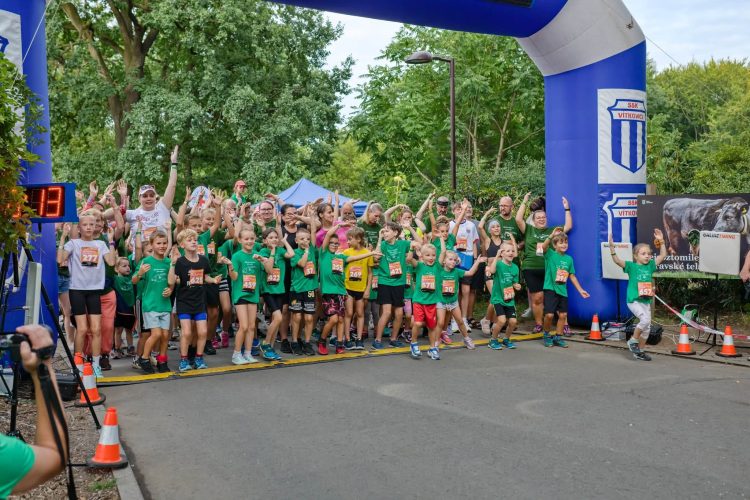
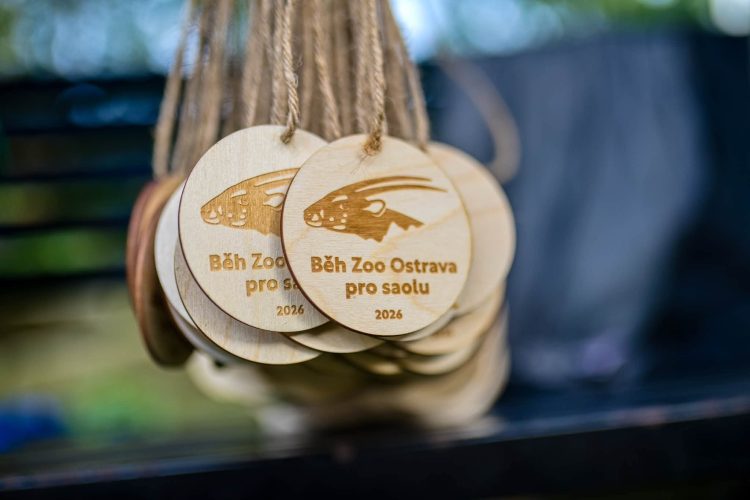
Runners in Saola shirts, Zoo Ostrava, 21 August 2026. Běh Zoo Ostrava pro saolu. Foto Ondřej Koelbl, Zoo Ostrava, 21. 8. 2026.
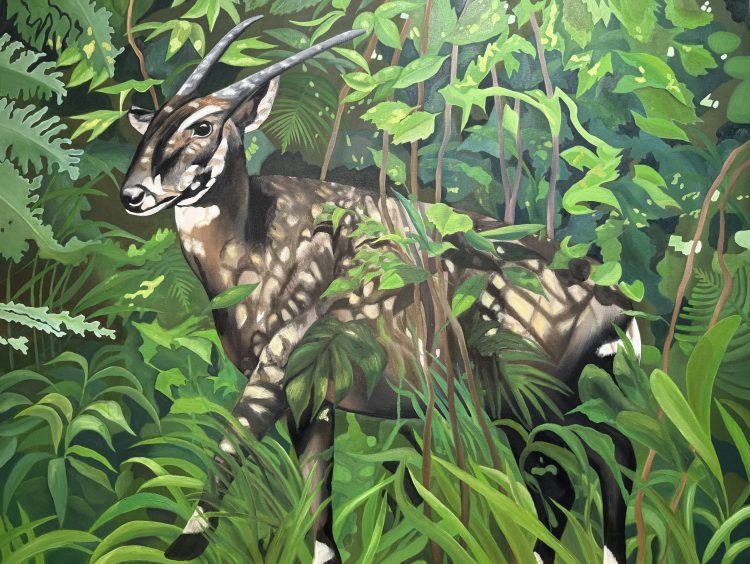
An original Saola painting, donated for auction
American artist Jeff Long has donated an original painting, Saola, to the campaign. Jeff published an article on the Saola in the Marin Independent Journal in September. Read it here.
The sale has closed and the painting remains unclaimed. If you are interested in it, please get in touch, or keep an eye out for our December auction.