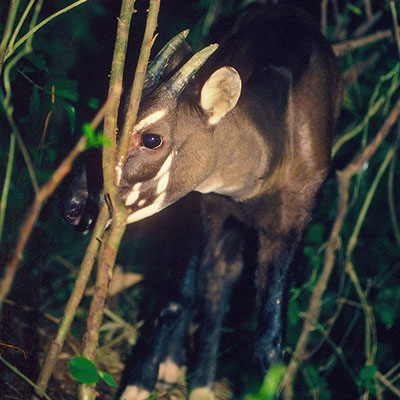
Image Credit: 1999 William Robichaud, Ban Vangban village and Wildlife Conservation Society (WCS)
The Asian Unicorn
Saola (Pseudoryx nghetinhensis)
Scientific name: Pseudoryx nghetinhensis
Genus: Pseudoryx (Monotypic – the Saola is the only species)
Tribe: Bovini (oxen, buffalos and bison)
Sub-family: Bovinae (oxen, Boselaphine and Tragelaphine antelopes)
Family: Bovidae (oxen, antelopes, sheep and goats)
Order: Artiodactyla
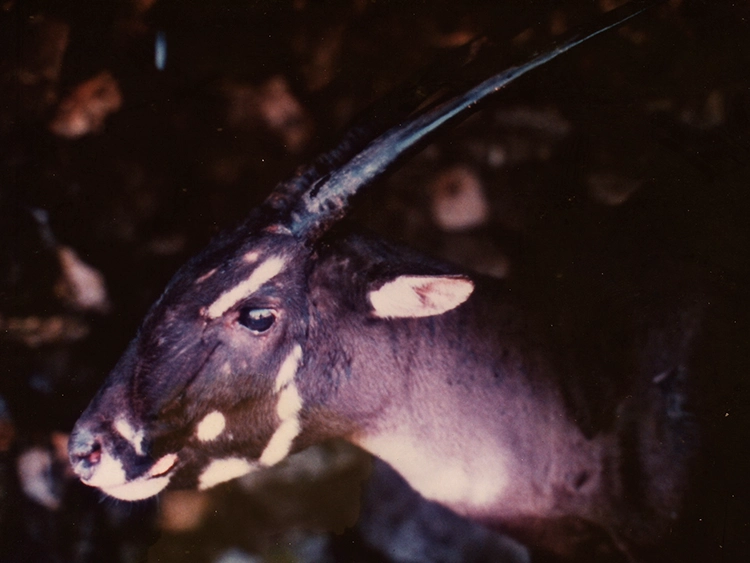
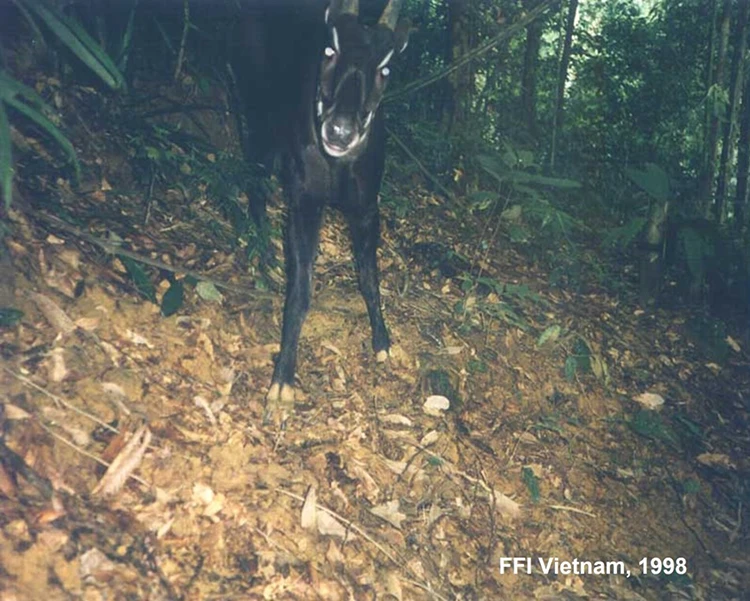
Hidden deep within the dense forests of the Annamite Mountains lives one of the world’s rarest and most extraordinary animals, the Saola (Pseudoryx nghetinhensis). Often called the ‘Asian Unicorn’ because of its rarity and elusiveness, this is remarkable species that remains almost entirely unseen in the wild.
The world first learned of the Saola in 1992, when unusual long-horned skulls were found in Vietnamese villages in the Northern Annamite Mountains. This discovery became one of the most remarkable zoological finds of the 20th century. It revealed that even today, the natural world still holds profound secrets, and that many species may disappear before we fully understand them.
Today, the Saola is Critically Endangered on the IUCN Red List of Threatened Species, with almost certainly fewer than 50 individuals remaining in the wild. The species declined rapidly and precipitously following its discovery, primarily from the proliferation of poachers using wire snares set to catch other animals. These indiscriminate traps are devastating large mammal populations across the region, and the Saola is one of their most vulnerable victims. Today, however, the greatest threat to Saola comes from its incredibly low density and dispersion of individuals, preventing animals from interacting and breeding naturally. Together, these pressures have pushed the species to the very edge of extinction.
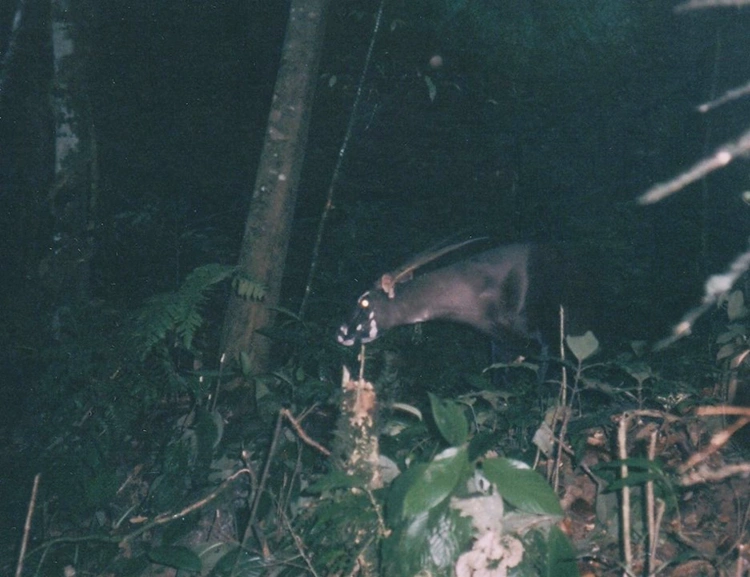
What Does the Saola Look Like?
The Saola is a medium-sized hoofed mammal with distinctive markings and striking features:
- Height: 80–100 cm at the shoulder
- Weight: 70–100 kg.
- Rich brown coat with contrasting white facial, chin and throat markings, pale pasterns and a cream band bordered by blackish stripes across the tail and rump, and a darker dorsal midline stripe.
- Long, slightly curving and slightly diverging horns (up to 55 cm), present in both males and females.
- Large pre-orbital facial scent glands with a raisable ‘lid’, taking up more than half the distance between eye and nose, presumably used for communication between individuals.
- Its long horns have contributed to its nickname, the ‘Asian Unicorn’.
The Annamite Mountains Bioregion
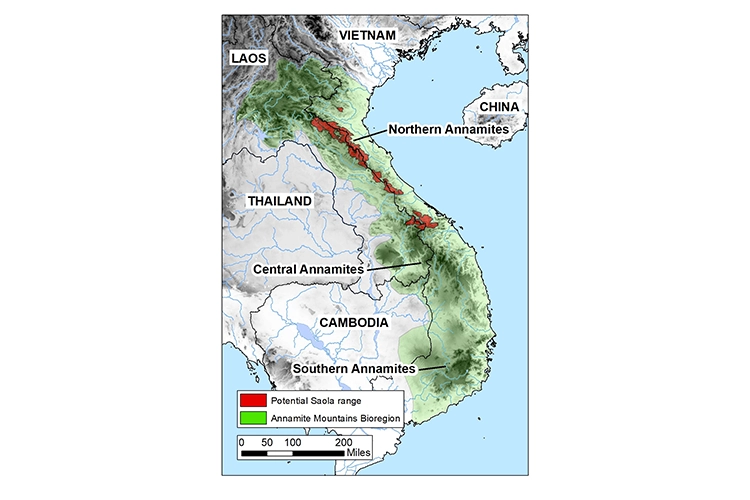
The Saola is found only in the Annamite Mountains, a rugged range stretching for over 1,100 km across Viet Nam, Lao, and into eastern Cambodia. This region is one of the most biologically rich places on Earth, and a living museum of evolution. Many species here are thought to have changed little since the Miocene Epoch, while yet more remain undiscovered. Remarkable animals from this region include the Large-antlered Muntjac (Muntiacus vuquangensis) and the Annamite Striped Rabbit (Nesolagus timminsi), species that, like the Saola, were unknown to science until recently. Yet this extraordinary landscape is under increasing threat, putting its unique biodiversity at risk.
Behavior and Ecology
Because the Saola was discovered so recently and rapidly became rare, no individual has ever been studied in the wild under natural circumstances, as a result much about its life history remains unknown. What scientists do understand suggests:
- Like other closed canopy forest ungulates, it is a forest browser, likely feeding a wide variety of forest plants in the understory, and eating fallen leaves, fruits, seeds and flowers, and quite probably various fungi.
- It is probably largely diurnal or perhaps crepuscular (most active at dawn and dusk).
- It is solitary, except for females with young, or possibly periodically found in small groups.
- Single carves are the norm.
- Home ranges are likely to be very large and the species not territorial.
- It inhabits wet evergreen, lower montane, and ‘mesic’ semi-evergreen forests, presumably at one time from close to sea level to over 1,000 meters elevation.
An Ancient Lineage
The Saola is more than just rare; it represents the sole survivor of an ancient evolutionarily lineage within the bovine family, with relatives that include wild cattle such as the Gaur.
Scientists believe its ancestors were once widespread across Southeast Asia, but today the Saola survives only in the Annamite Mountains Bioregion. In many ways, it is a living relic of a much older world offering a glimpse into the region’s deep evolutionary past.
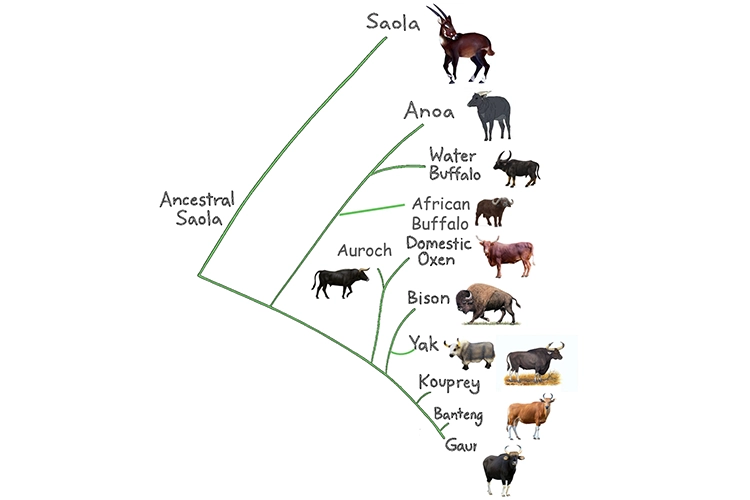
The Saola’s simplified evolutionary tree: the common ancestor, most probably similar to the present-day Saola, was likely widespread in middle Miocene Southeast Asian rainforests, with present-day Saola surviving only in the Annamites, while related lineages gave rise to wild oxen such as anoas and Gaur.
Why the Saola Matters
The Saola stands as one of the most extraordinary discoveries of modern science and one of the clearest reminders of what is at stake.
It is:
- One of the most recent large mammals discovered by science
- One of the rarest animals on Earth
- A symbol of the richness and fragility of the natural world
Saving the Saola means more than protecting a single species. It means preserving a deep ancestral evolutionary lineage and conserving one of the most threatened ecosystems on the planet.
Learn about the Saola Foundation’s
- solutions to finding Saola
- efforts to save the Saola from extinction
- long-term conservation strategy
to protect the rich biodiversity of the Annamite Mountains Bioregion by leading efforts to prevent unrecoverable biodiversity loss.
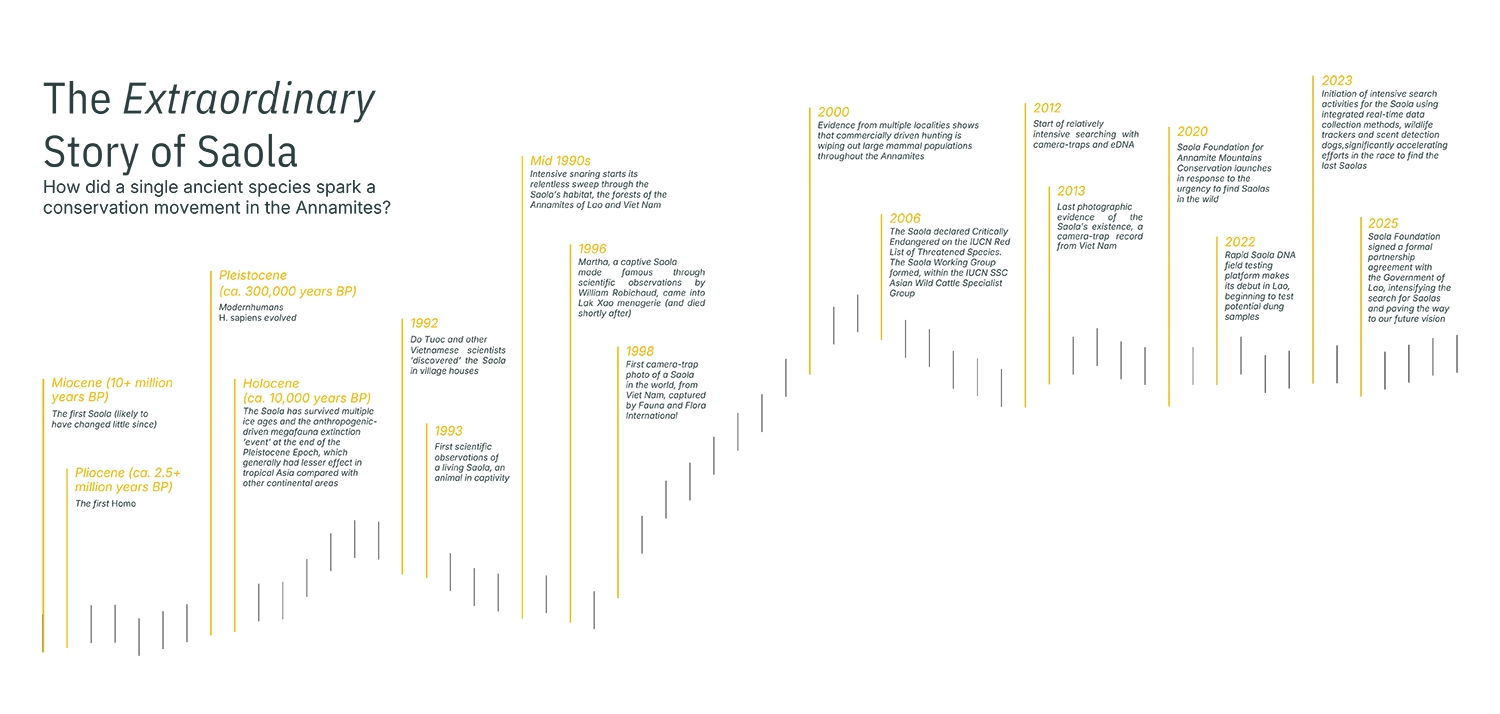
The Saola is classified as Critically Endangered on the IUCN Red List: the global population is estimated to be fewer than 50.

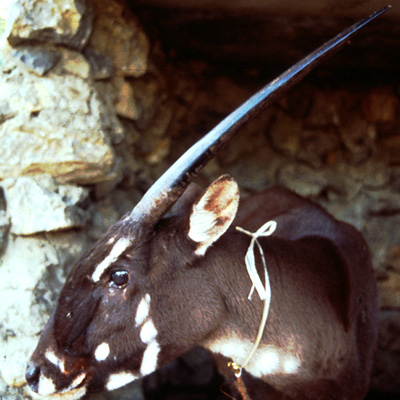
The Saola was discovered by science in 1992 and there remains no confirmed wild sighting by a biologist.
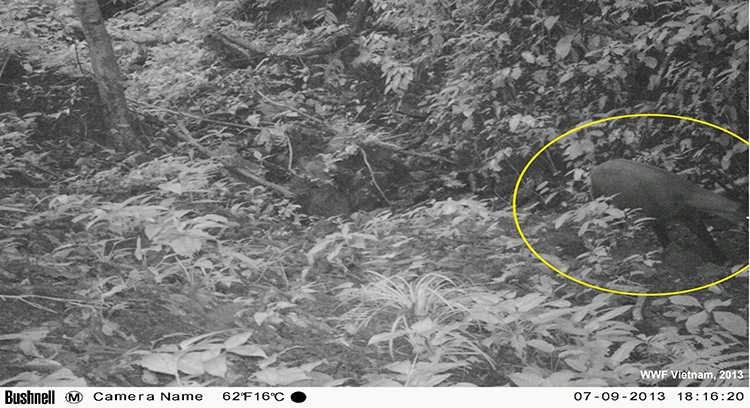
Much of what is known about Saola comes from local people, a few animals once held in captivity, and a handful of camera trap photos – it is one of the the world’s least-known large mammals.
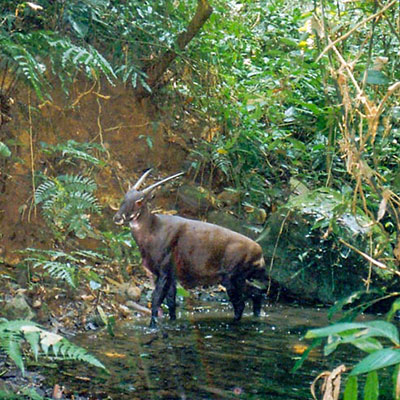
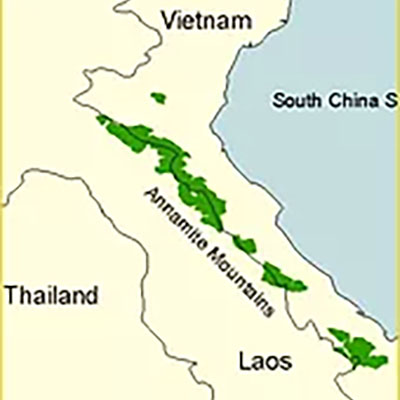
The Saola is endemic to the tropical evergreen forests of the Annamite Mountains in Lao PDR and Vietnam.
It is found nowhere else on earth.
There are no Saola in captivity, anywhere. Preventing extinction requires establishing a captive breeding population.